
Παρουσίαση/Προβολή
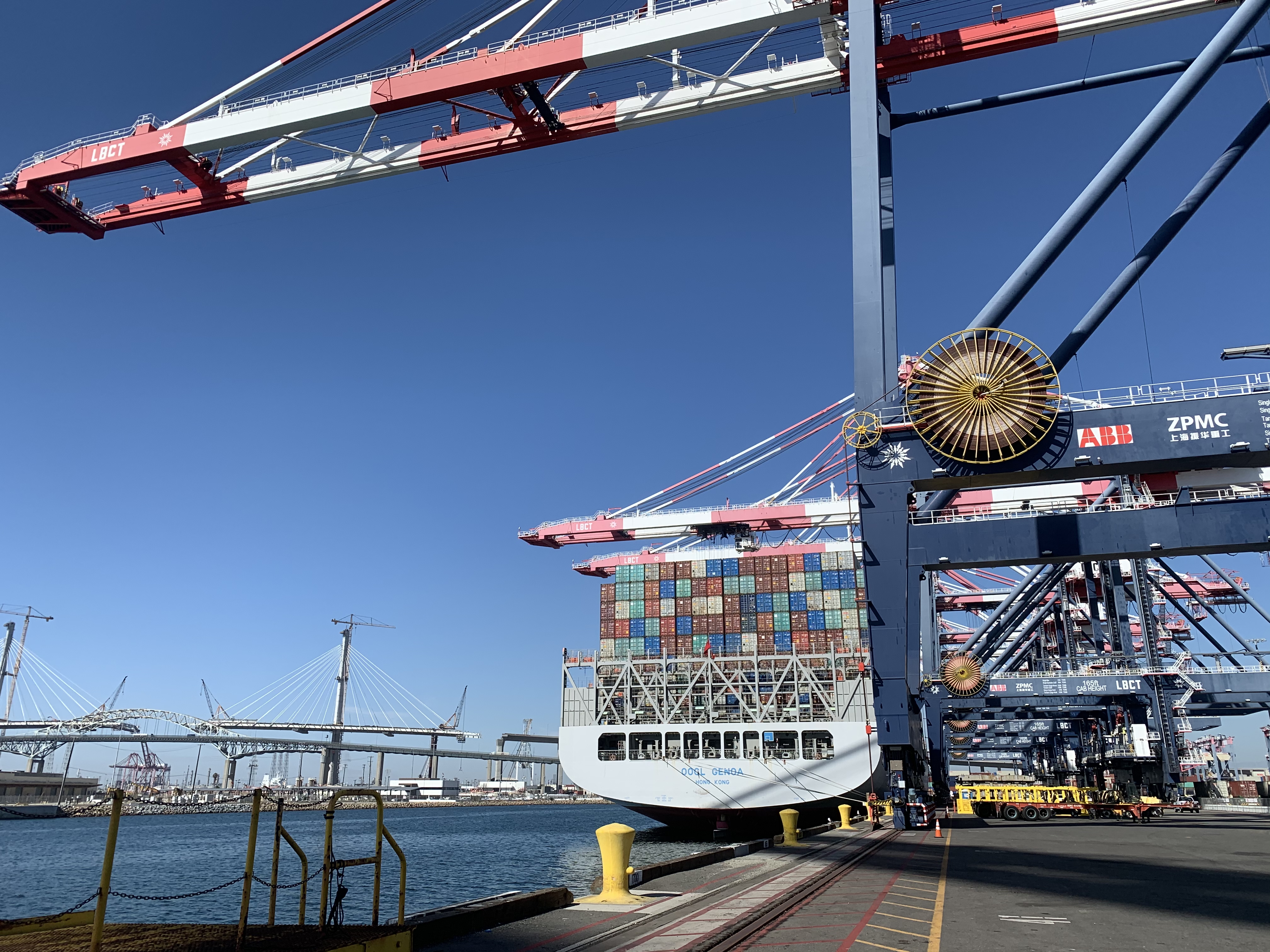
Port & Terminal Management
((NAS-SHM130)) - Thanos Pallis
Περιγραφή Μαθήματος
The course analyses the contemporary port industry and how seaports and their terminals are organized and managed to serve the global economy and regional and local development needs. It uses a conceptual background supported by extensive fieldwork and empirical observations to investigate how the port industry is evolving in the context of the international environment, the changing trends in transport, trade and logistics, the parameters determining the organization of modern ports, and the provision of port services, the principles and forms of port competition, the implications of port integration in supply chains, the structures of modern port governance, the formats of private and public sectors, and the measurements of port performance. It concludes with a review of key developments and the principles of management and governance. Theoretical concepts are linked with practical, real case examples, and when applicable, case exercises are part of the course material.
Suggested bibliography:
- Lectures, Presentations and related notes by the instructors (available via e-class)
- Νοtteboom, Τ. Pallis A. & Rodrigue J-P. (2022) Port Economics, Management and Policy – London: Routledge (web companion: https://porteconomicsmanagement.org)
- PortEconomics – a web-based initiative aiming to provide freely accessible research, education, information, and network-building material on critical issues of port economics, management and policies. (porteconomics.eu)
Also:
- De Langen P.W. (2021). Towards a better port industry. London: Routledge.
- Pallis A. (2023). Port Economy, Athens: Papazisis (in Greek).
Related academic journals:
- Maritime Economics and Logistics, Maritime Policy and Management, International Journal of Shipping and Transport Logistics, Journal of Shipping and Trade, Research in Transportation Business and Management, Journal of Transport Geography, Transport Reviews, and Transportation Research Policy and Practice.
- Specialised press, which in most cases is published electronically: PortEconomics; Port Strategy; Port Technology International; Naftika Chronika; Naftemporiki.
Ημερομηνία δημιουργίας
Τρίτη 14 Φεβρουαρίου 2023
-
Course Syllabus
The purpose of the course is to generate knowledge on: the principles of modern port system organization and management and how the port industry has evolved in the context of the international environment and the changing trends in transport, trade and logistics, the parameters determining the organization of modern ports and the provision of port services, the principles and forms of port competition, the implications of port integration in supply chains, the structures of modern port governance, the formats of private and public sectors, and the measurements of port performance. It concludes with a review of key developments and the principles of management and governance of the Greek as well as the European port system. Theoretical concepts are linked with practical, real case examples, and when applicable, case exercises are part of the course material.
The syllabus includes the following thematic areas:
- Introduction: Defining modern ports
- Ports, terminals, services, and systems
- Ports and terminals management
- Determinants of port industry developments & the economic significance of ports and terminals
- Demand & Supply of Port services – the role of changes in maritime transportation
- The port as a transport node / The port as an economic arena / Port Clusters
- Models of Port and port terminal organisation / Port Services providers / Worlds of production of port services
- Port Competition
- European Ports / The Greek Port System